We seal 12 South's pier-and-beam crawl spaces under a heavy membrane and use a quiet inline fan to pull radon out from beneath it, venting it above the roofline.
12 South sits in Davidson County, which the EPA designates Radon Zone 1 — the highest of its three risk categories. The fractured limestone bedrock beneath Nashville's urban core contains trace uranium that decays into radon gas, and that gas rises through soil and rock into whatever sits above it. A renovated 1930s cottage near Sevier Park faces the same geology as a brand-new tall-skinny two doors down; the difference is only in how easily the gas gets inside.
The neighborhood's original housing stock — pier-and-beam cottages from the 1920s through the 1940s — usually has a vented, dirt-floor crawl space with no barrier at all, so radon drifts straight up through plank subfloors, plumbing chases, and the gaps around brick piers. The newer infill along Belmont Blvd isn't automatically safer: tight modern construction can actually trap soil gas indoors, and many tall-skinny builds sit on crawl spaces finished with thin, unsealed plastic.
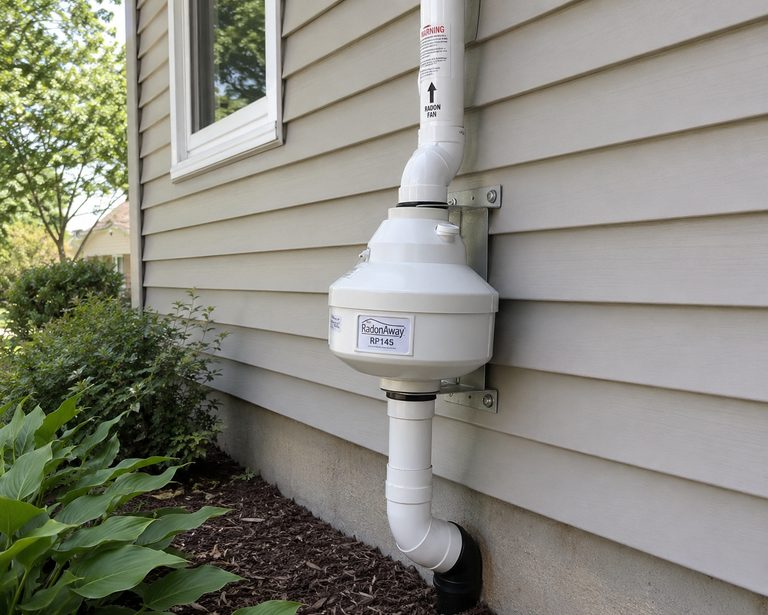
For crawl space homes, the EPA-recognized approach is sub-membrane depressurization. We fit a heavy-duty vapor barrier across the entire crawl space floor, seal it up the foundation walls, and — critical in 12 South — seal it around every original pier. A suction point goes beneath the membrane, connected by PVC to a quiet inline radon fan that runs continuously, pulling soil gas out from under the barrier and discharging it above the roofline.
Each 12 South system includes a sealed 20-mil reinforced vapor barrier serving as the radon membrane, every seam, pier, and penetration sealed, a properly excavated suction pit, a low-watt inline fan rated for continuous duty, exterior PVC routed discreetly and terminated above the roofline per EPA guidance — we plan the route to respect a historic facade — plus a system monitor and post-install radon testing to confirm levels have dropped below 4 pCi/L.
Many 12 South crawl spaces need moisture control anyway — humid air pouring through open foundation vents under a hundred-year-old floor system. A full encapsulation solves that, and the same sealed membrane doubles as your radon barrier, so combining the two projects costs far less than doing them separately. Already encapsulated? We can retrofit an active fan and suction point to your existing liner.
Pricing depends on crawl space size and height, how many piers and penetrations need sealing, whether an encapsulation is already in place, and where the vent stack can run on your particular lot — tight 12 South setbacks sometimes shape the routing. We provide a free written estimate after walking your crawl space in person.
We walk your 12 South crawl space, note the pier layout and any prior radon tests, and map the right suction approach.
Itemized scope and price, including any encapsulation work needed for the system to perform.
Membrane, suction pit, PVC routing, fan, and exterior termination — installed cleanly and code-aware.
We retest to confirm radon levels have dropped below the EPA action level and leave you with a working system monitor.
Yes. Davidson County is designated EPA Radon Zone 1, the highest-risk category, and the limestone bedrock under 12 South produces radon regardless of a home's age or price. Both century-old cottages and brand-new tall-skinny builds in 37204 can test above the 4 pCi/L action level.
Not harder — just different. Pier-and-beam crawl spaces have lots of penetrations and piers that each need to be sealed into the membrane. Done carefully, an older 12 South cottage can achieve the same negative pressure under the barrier as a modern home.
A heavy-duty vapor barrier is sealed across the crawl space floor and up the walls, a suction point is set beneath it, and a quiet inline fan runs continuously, drawing soil gas out from under the membrane and venting it above the roofline before it can reach your living space.
We route the exterior PVC along the least visible side of the house wherever the lot allows and paint-friendly piping can be color-matched. The fan itself is a compact canister mounted on the run, not a bulky unit.
Modern inline radon fans are built for continuous operation and run quietly. Mounted on the exterior run, they're typically barely audible from inside a 12 South home.
Yes. A pre-install test confirms elevated radon and gives you a baseline. After installation and 24 hours of continuous fan operation, we test again to verify levels have dropped below 4 pCi/L.
Schedule a free crawl space evaluation. We'll walk the space, review any test results you have, and give you a clear plan.
Get My Free InspectionTell us a little about your home and we'll be in touch soon to schedule a no-pressure visit.
