We install sub-membrane depressurization systems built into a sealed crawl space — pulling soil gas out from under the barrier and venting it safely above the roofline.
Radon is an invisible, odorless radioactive gas that seeps out of soil and rock and into homes through crawl spaces, slabs, and basements. The EPA identifies long-term radon exposure as a leading environmental cause of lung cancer. Much of Middle Tennessee sits on uranium-bearing limestone, and a meaningful share of Davidson, Williamson, Rutherford, and Wilson County homes test above the 4 pCi/L action level.
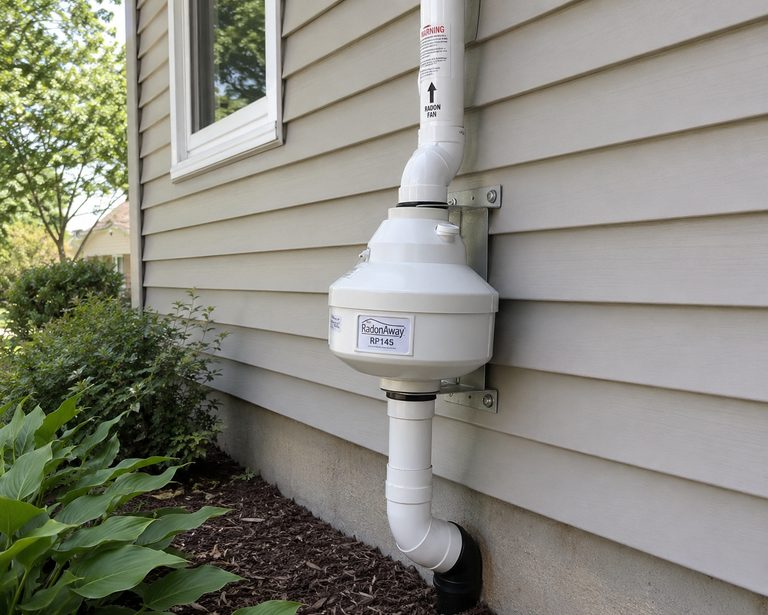
For homes with a crawl space, the standard, EPA-recognized approach is sub-membrane depressurization. We install a heavy-duty sealed vapor barrier over the entire crawl space floor and run it up the foundation walls. A suction point is placed beneath the membrane, connected to PVC piping and a quiet inline radon fan that runs continuously, pulling soil gas out from under the barrier and venting it above the roofline before it can enter your living space.
Every installation includes a sealed 20-mil reinforced vapor barrier acting as the radon membrane, all seams and penetrations sealed, a properly placed suction pit, a low-watt inline radon fan rated for continuous use, exterior PVC routed and vented above the roofline per EPA guidance, a system monitor so you can verify the fan is operating, and post-install radon testing to confirm levels have dropped.
If your home doesn't have a sealed crawl space yet, radon mitigation is a natural pairing with a full encapsulation — the same membrane that controls moisture also becomes the radon barrier. Homes that already have encapsulation can have an active depressurization system retrofitted to the existing barrier.
Radon mitigation pricing depends on the size of the crawl space, the suction layout required to achieve negative pressure, whether encapsulation is already in place, and exterior routing for the vent. We provide a free written estimate after an on-site evaluation.
We walk the crawl space, review any prior radon tests, and identify the right suction layout for your home.
Itemized scope and price, including any encapsulation work needed for the system to perform.
Membrane, suction pit, PVC routing, fan, and exterior termination — installed cleanly and code-aware.
We retest to confirm radon levels have dropped below the EPA action level and leave you with a working system monitor.
Yes. Much of Middle Tennessee sits on uranium-bearing bedrock, and the EPA classifies many counties in the region as elevated radon zones. Test results above the 4 pCi/L action level are common in Davidson, Williamson, and surrounding counties.
The standard approach is sub-membrane depressurization. A sealed vapor barrier is installed over the dirt floor and up the walls, a suction point is placed beneath the membrane, and a quiet inline fan continuously vents the soil gas to the exterior above the roofline.
Encapsulation reduces radon entry by sealing the soil from the home, but it is not a guaranteed mitigation system on its own. Homes with elevated post-test readings typically need an active sub-membrane depressurization system added to the encapsulation.
Modern inline radon fans are designed for continuous operation and are quiet — typically barely audible from inside the home when properly installed on an exterior wall.
The fan itself is low-wattage and runs continuously, but the impact on a typical Nashville energy bill is modest. The sealed membrane also reduces moisture load on your HVAC, which often offsets the difference.
Both. We recommend a pre-install test to confirm elevated radon and establish a baseline, and a post-install test after 24 hours of continuous fan operation to verify the system is reducing levels below 4 pCi/L.
Schedule a free crawl space evaluation. We'll walk the space, review any test results you have, and give you a clear plan.
Get My Free InspectionTell us a little about your home and we'll be in touch soon to schedule a no-pressure visit.
