We seal Brentwood crawl spaces under a heavy membrane and exhaust radon above the roofline with a quiet inline fan, sized for larger footprints.
The rolling hills that make Brentwood lots so desirable are built from Williamson County limestone — rock that carries trace uranium and steadily releases radon gas as it decays. That geology is why the EPA places the entire county in Radon Zone 1, its highest-risk category. Elevation and exclusivity offer no protection: hilltop estates off Concord Rd sit on the same gas-producing bedrock as everything else in 37027.
Brentwood's signature housing stock — substantial 1980s-2000s builds on large lots — was almost always constructed over vented crawl spaces with loose plastic sheeting at best. A bigger footprint means more soil in contact with the home and more entry routes: gaps in the vapor barrier, block foundation cores, plumbing and HVAC penetrations, and rows of open foundation vents. Finished basements and bonus-room additions add their own slab cracks and joints to the list.
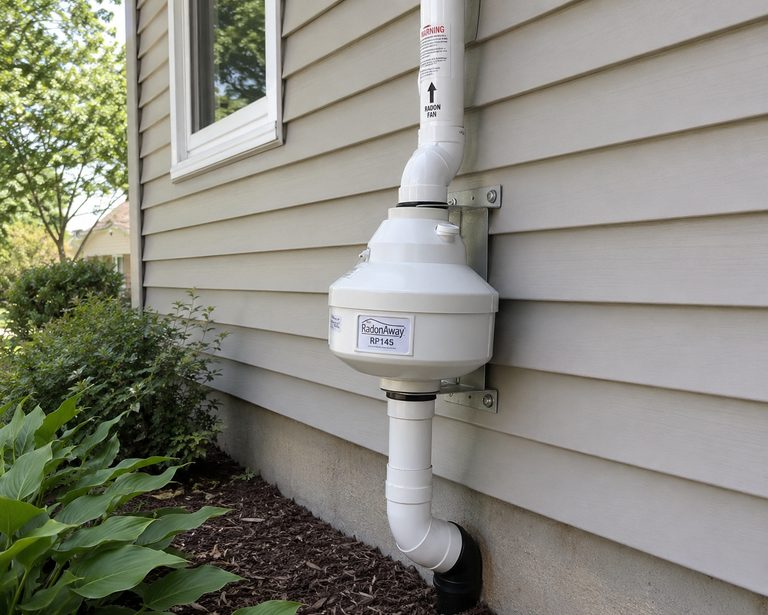
The EPA-recognized fix for crawl space homes is sub-membrane depressurization. We seal a heavy-duty vapor barrier across the full crawl space floor and up the foundation walls, then place one or more suction pits beneath the membrane — larger Brentwood footprints often need multiple points to hold negative pressure everywhere. PVC piping connects the pits to a quiet inline radon fan that runs continuously, drawing soil gas out from under the barrier and discharging it above the roofline.
Each Brentwood system includes a sealed 20-mil reinforced vapor barrier serving as the radon membrane, all seams and penetrations sealed, suction pits engineered for the home's square footage, a low-watt inline fan rated for continuous duty, exterior PVC routed with the home's architecture in mind and terminated above the roofline per EPA guidance, a system monitor so you can verify operation at a glance, and post-install testing to confirm levels have dropped below 4 pCi/L.
Many Brentwood homeowners are already considering encapsulation for humidity, energy, and air-quality reasons — and the two projects share their most expensive component. The sealed membrane that controls crawl space moisture is the same membrane that makes depressurization work, so combining them in one visit costs meaningfully less than two separate projects. Already encapsulated? We can retrofit a suction pit and fan to your existing barrier.
Pricing scales with crawl space size, the number of suction points needed for full coverage under the membrane, whether a usable encapsulation already exists, and the exterior vent routing on your home. Brentwood's larger homes often need a more robust layout than average, which is exactly why we quote only after a free in-person evaluation, delivered in writing.
We walk your Brentwood crawl space, review any prior radon tests, and determine how many suction points your footprint requires.
Itemized scope and price, including any encapsulation work needed for the system to perform.
Membrane, suction pit, PVC routing, fan, and exterior termination — installed cleanly and code-aware.
We retest to confirm radon levels have dropped below the EPA action level and leave you with a working system monitor.
Many do. Brentwood sits in Williamson County, which the EPA designates Radon Zone 1 — the highest-risk classification — because of the uranium-bearing limestone beneath the county's rolling hills. Plenty of homes along the Concord Rd corridor and beyond have tested above the 4 pCi/L action level, regardless of size or build quality.
Because radon comes from the rock below, not the construction above. Even premium 1980s-2000s builds in Brentwood typically have vented crawl spaces with unsealed plastic on the floor — fine practice for its day, but an open door for soil gas. Larger footprints can actually mean more soil contact area and more entry points.
Through sub-membrane depressurization: a heavy vapor barrier is sealed across the crawl space floor and up the foundation walls, a suction pit is placed beneath the membrane, and a quiet inline fan runs continuously, pulling soil gas out from under the barrier and venting it above the roofline.
We plan the exterior routing around your home's architecture, running PVC along the least visible elevation the layout allows and terminating above the roofline. On most Brentwood installs the finished run is unobtrusive.
Often, yes — not a louder fan, but additional suction points under the membrane so negative pressure holds across the whole footprint. We confirm the layout during the free evaluation rather than guessing.
It's increasingly common in Williamson County transactions. A pre-listing or inspection-period test gives both sides clear numbers, and if mitigation is needed, a post-install retest after 24 hours of fan operation documents that levels are below 4 pCi/L.
Schedule a free crawl space evaluation. We'll walk the space, review any test results you have, and give you a clear plan.
Get My Free InspectionTell us a little about your home and we'll be in touch soon to schedule a no-pressure visit.
