We seal Cleveland Park's pier-and-beam crawl spaces under a heavy barrier and vent radon above the roofline with a quiet inline fan.
Like the rest of East Nashville, Cleveland Park sits on Davidson County limestone that contains trace uranium — the source of the radon gas that earns the county its EPA Radon Zone 1 rating, the highest of the three risk categories. Radon doesn't follow neighborhood lines or home values; it follows fractures in the rock. The only way to know where your block stands is to test, and elevated results are common across 37207.
Cleveland Park's original early-1900s cottages typically sit on brick piers over bare dirt, with open foundation vents and zero barrier between soil and subfloor — radon simply drifts up through the floor system. The new infill replacing or joining them along Dickerson Pike has its own weak spots: builder-grade plastic dropped loose over the dirt, unsealed at walls and seams, under a tightly built house that holds whatever gas gets in.
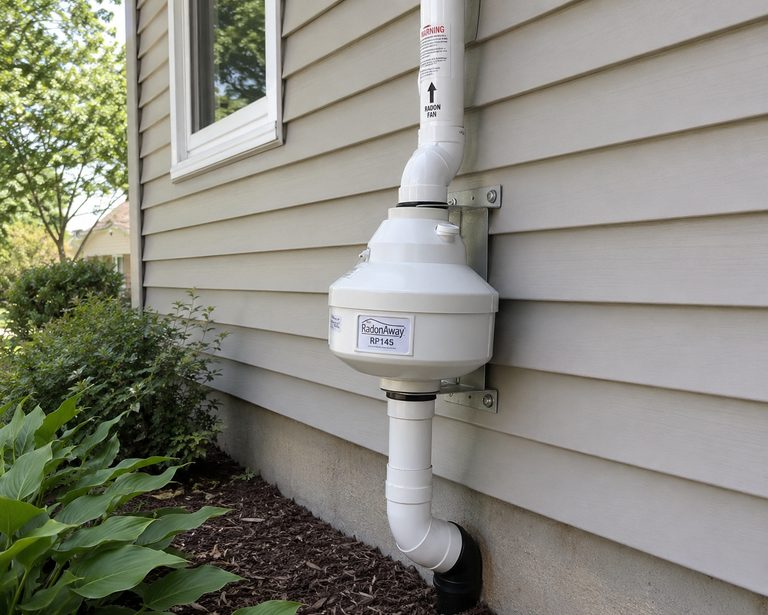
The EPA-recognized answer for crawl space homes is sub-membrane depressurization. A heavy-duty vapor barrier is sealed over the full crawl space floor and up the foundation walls — in a pier-and-beam cottage that means careful cutting and sealing around every brick pier. A suction pit goes beneath the membrane, connected by PVC to a quiet inline radon fan that runs continuously, extracting soil gas from under the barrier and releasing it above the roofline.
Every Cleveland Park system includes a sealed 20-mil reinforced vapor barrier acting as the radon membrane, all piers, seams, and penetrations sealed, a properly excavated suction pit, a low-watt inline fan rated for continuous duty, exterior PVC routed and terminated above the roofline per EPA guidance, a system monitor so you can confirm the fan is running, and post-install radon testing to verify levels have dropped below 4 pCi/L.
Old East Nashville crawl spaces almost always have a moisture story too — damp dirt, musty floors, humid summer air pouring through the vents. Full encapsulation fixes that, and its sealed membrane is the very barrier a radon system depends on, so doing both at once shares the biggest cost between two problems. Homes with an existing encapsulation can have a suction pit and fan added to the current liner.
Price depends on the crawl space footprint and clearance — some Cleveland Park cottages sit low to the ground — the number of piers to seal, whether encapsulation already exists, and the vent route on a narrow urban lot. We give a free written estimate after evaluating your crawl space in person.
We walk your Cleveland Park crawl space, check pier layout and clearance, review any prior radon tests, and plan the suction approach.
Itemized scope and price, including any encapsulation work needed for the system to perform.
Membrane, suction pit, PVC routing, fan, and exterior termination — installed cleanly and code-aware.
We retest to confirm radon levels have dropped below the EPA action level and leave you with a working system monitor.
It's worth a test. Cleveland Park is in Davidson County, which the EPA classifies as Radon Zone 1 — the highest-risk zone — because the limestone under Nashville steadily releases radon gas. East Nashville's older housing stock offers that gas an especially easy path indoors, and renovations don't change the geology.
Yes. Most Cleveland Park renovations update kitchens, systems, and finishes but leave the original pier-and-beam crawl space untouched — bare dirt, open vents, no barrier. Radon rises from the soil regardless of what's been remodeled upstairs, so a renovated 1910s cottage can test just as high as an untouched one.
We seal a heavy-duty vapor barrier across the crawl space floor and up the foundation walls, fit it around each pier, set a suction pit beneath the membrane, and connect it to a quiet inline fan that runs continuously — pulling soil gas out from under the barrier and venting it above the roofline.
Usually, yes. Many Cleveland Park cottages sit close to the ground, and our crews are equipped for tight-access work. We confirm clearance and access points during the free evaluation.
No — inline radon fans are built for quiet continuous operation, and from inside a typical Cleveland Park home a properly mounted exterior fan is barely audible.
Testing. We recommend a baseline test before installation, then a follow-up test after the fan has run continuously for 24 hours to confirm levels are below the EPA's 4 pCi/L action level. The system monitor lets you verify the fan keeps running afterward.
Schedule a free crawl space evaluation. We'll walk the space, review any test results you have, and give you a clear plan.
Get My Free InspectionTell us a little about your home and we'll be in touch soon to schedule a no-pressure visit.
