We install sub-membrane depressurization systems in Donelson crawl spaces — pulling soil gas out from under a sealed barrier and venting it above the roofline.
All of Davidson County, Donelson included, is designated EPA Radon Zone 1 — the highest of the three risk categories. The neighborhood sits on the same uranium-bearing limestone that underlies the rest of Middle Tennessee, and the low ridges and river terraces between the Stones River and the Cumberland do nothing to slow soil gas. Radon doesn't care whether you're in Two Rivers, near the airport, or off Lebanon Pike — it's a function of the rock under the footprint of your house.
Donelson grew fast in the 1950s and 60s, and most of those brick ranches were built over vented crawl spaces with bare dirt floors — or, at best, a thin sheet of plastic tossed down decades later. With nothing sealed between the soil and the subfloor, radon rises through the dirt and slips into the house through plumbing penetrations, HVAC duct chases, gaps at the band joist, and the floor itself. Open foundation vents create pressure swings that can actually pull more soil gas upward.
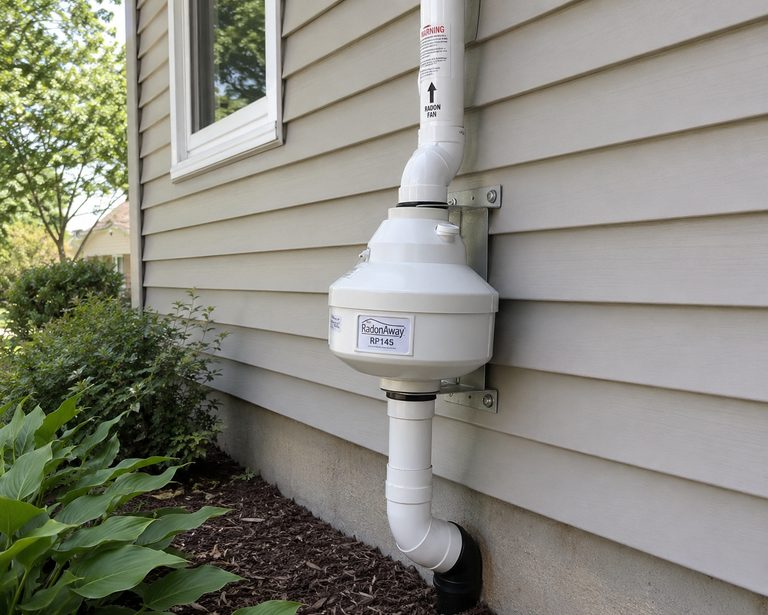
For a crawl space home, the EPA-recognized fix is sub-membrane depressurization. We cover the entire crawl space floor with a heavy-duty sealed vapor barrier and run it up the foundation walls, creating a continuous airtight layer over the soil. A suction point goes beneath the membrane, connected by PVC to a quiet inline radon fan that runs continuously, drawing soil gas out from under the barrier and exhausting it above the roofline — before it ever reaches your living room.
Every Donelson system includes a sealed 20-mil reinforced vapor barrier serving as the radon membrane, all seams and penetrations taped and sealed, a properly excavated suction pit, a low-watt inline radon fan rated for continuous duty, exterior PVC routed and terminated above the roofline per EPA guidance, a manometer-style system monitor so you can confirm the fan is pulling, and post-install radon testing to verify levels have dropped below 4 pCi/L.
If your Donelson crawl space hasn't been encapsulated yet, doing both at once is the efficient path — the same sealed membrane that blocks ground moisture is the radon barrier, so you pay for the liner once and get both benefits. Already encapsulated? We can retrofit a suction point and fan to your existing barrier and convert it into an active mitigation system.
Pricing comes down to the square footage under your ranch, how many suction points it takes to hold negative pressure under the membrane, whether an encapsulation is already in place, and where the vent stack can run on the exterior. We provide a free written estimate after walking your Donelson crawl space in person — no phone-quote guesswork.
We walk your Donelson crawl space, review any prior radon tests, and map the right suction layout for your ranch.
Itemized scope and price, including any encapsulation work needed for the system to perform.
Membrane, suction pit, PVC routing, fan, and exterior termination — installed cleanly and code-aware.
We retest to confirm radon levels have dropped below the EPA action level and leave you with a working system monitor.
Yes. Donelson sits in Davidson County, which the EPA designates Radon Zone 1 — the highest-risk category. The limestone bedrock under east Nashville produces radon regardless of neighborhood, and plenty of Donelson homes test above the 4 pCi/L action level.
Most mid-century ranches in Donelson were built over vented crawl spaces with bare dirt floors or thin, unsealed plastic. With no membrane between the soil and the subfloor, radon migrates straight up through floor penetrations, ductwork chases, and gaps at the band joist into the living space.
With sub-membrane depressurization. We seal a heavy vapor barrier across the crawl space floor and up the walls, set a suction point beneath it, and run a quiet inline fan that pulls soil gas out from under the membrane and vents it above the roofline.
Inline radon fans are built for continuous, quiet operation. Mounted on the exterior with vibration-isolating couplings, the fan is typically barely noticeable from inside a Donelson ranch.
Proximity to the Stones River or Cumberland doesn't lower radon risk — the gas comes from the bedrock beneath the soil, not the water. The only way to know your home's level is to test it.
Yes. A pre-install test confirms elevated radon and sets a baseline, and a post-install test after at least 24 hours of continuous fan operation verifies the system is holding levels below 4 pCi/L.
Schedule a free crawl space evaluation. We'll walk the space, review any test results you have, and give you a clear plan.
Get My Free InspectionTell us a little about your home and we'll be in touch soon to schedule a no-pressure visit.
