We seal East Nashville's pier-and-beam crawl spaces and install sub-membrane depressurization — pulling radon out from under the barrier and venting it above the roofline.
Davidson County carries the EPA's Radon Zone 1 designation — the highest of three categories — and East Nashville sits on the same uranium-bearing limestone as the rest of the county. A home's age, charm, or proximity to Shelby Park has no bearing on what's in the rock below it. Historic neighborhoods like Lockeland Springs and Edgefield were platted long before anyone knew radon existed, which means none of that housing stock was built with soil gas in mind.
East Nashville's pre-war homes typically rest on brick piers over a shallow dirt crawl space, ringed by foundation vents that have been open for a century. Radon rises off the exposed soil and finds dozens of routes upstairs: gaps between original plank subflooring, cut-outs around cast iron plumbing stacks, chases beside chimneys, and the seams where additions meet the original structure. Renovations that added HVAC ducts under the floor often punched even more holes in the thermal and air boundary.
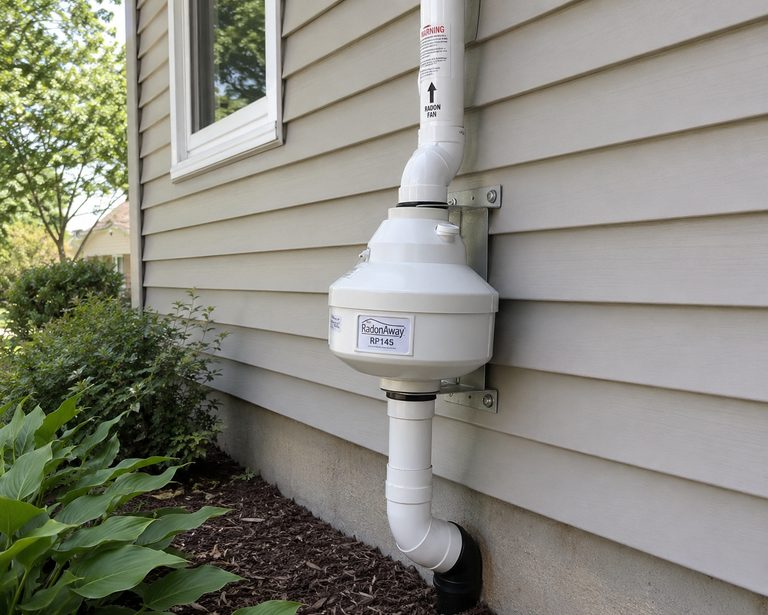
The fix the EPA recognizes for crawl space homes is sub-membrane depressurization. We lay a heavy-duty sealed vapor barrier across the entire dirt floor, cut and seal it around every brick pier, and run it up the perimeter walls. Beneath that membrane we set a suction point, tied by PVC to a quiet inline radon fan running continuously. Soil gas gets pulled out from under the barrier and exhausted above the roofline instead of drifting up through your heart-pine floors.
Each installation includes a sealed 20-mil reinforced vapor barrier as the radon membrane, careful detailing around piers and penetrations — the fussy part in a pier-and-beam house — a properly placed suction pit, a low-watt inline fan rated for continuous duty, exterior PVC routed with respect for your home's historic facade and terminated above the roofline per EPA guidance, a system monitor, and post-install testing to confirm levels have dropped below 4 pCi/L.
Most East Nashville crawl spaces that need radon work also need moisture work — the two problems share a dirt floor. Encapsulating while we install the mitigation system means one membrane does both jobs: it blocks ground moisture that warps old hardwoods and serves as the sealed radon barrier. If your bungalow is already encapsulated, we can retrofit a suction point and fan to the existing liner.
Cost depends on crawl space square footage, how many piers need to be detailed into the membrane, the number of suction points required to hold negative pressure, and the exterior vent route. Older homes vary a lot underneath, so we price from a free in-person walkthrough and put the full scope in writing.
We walk your East Nashville crawl space, note pier layout and prior test results, and plan the suction strategy.
Itemized scope and price, including any encapsulation work needed for the system to perform.
Membrane, suction pit, PVC routing, fan, and exterior termination — installed cleanly and code-aware.
We retest to confirm radon levels have dropped below the EPA action level and leave you with a working system monitor.
Yes. Davidson County is EPA Radon Zone 1, the highest-risk designation, and the limestone bedrock under East Nashville doesn't distinguish between a new build and a 1910 Victorian. Homes in Lockeland Springs and around Five Points test above the 4 pCi/L action level often enough that testing is always worth doing.
Not reliably. Open vents create unpredictable airflow, and in cooler months the stack effect actively pulls crawl space air — radon included — up into the house through the original plank subfloor and its many gaps. A sealed membrane with active depressurization removes the gas at the source instead of hoping the breeze handles it.
We seal a heavy vapor barrier across the dirt floor, around each brick pier, and up the perimeter walls, then place a suction point under the membrane connected to a quiet inline fan. The fan runs continuously, drawing soil gas out from beneath the barrier and venting it above the roofline.
We route exterior PVC along the least visible elevation we can — usually a rear or side wall — and terminate it above the roofline per EPA guidance. We walk the routing options with you before any pipe goes up.
Modern inline radon fans are designed for continuous operation and are quiet — from inside the house, most homeowners can't pick the fan out over normal background noise.
Yes. We recommend a baseline test before installation and a follow-up test after at least 24 hours of continuous fan operation to verify levels have dropped below the EPA's 4 pCi/L action level.
Schedule a free crawl space evaluation. We'll walk the space, review any test results you have, and give you a clear plan.
Get My Free InspectionTell us a little about your home and we'll be in touch soon to schedule a no-pressure visit.
