We install sub-membrane depressurization systems in Green Hills crawl spaces — a sealed barrier with a quiet inline fan venting radon above the roofline.
Green Hills belongs to Davidson County, which the EPA classifies as Radon Zone 1 — the highest of three risk levels. The neighborhood's namesake hills are limestone underneath the trees, and that rock carries the trace uranium that decays into radon gas across Middle Tennessee. Wooded lots, mature landscaping, and a renovated interior change nothing about the geology; whether your home is near the Mall at Green Hills or tucked off Hillsboro Pike, the bedrock below behaves the same.
The classic Green Hills home is a 1950s or 60s ranch over a vented crawl space, and many have since been expanded or gut-renovated above the floor line. The crawl space, though, usually still looks like 1958: bare dirt or a loose scrap of plastic, open foundation vents, and decades of plumbing and HVAC penetrations through the subfloor. Radon rises off that exposed soil and enters through those penetrations — and ironically, a tightly renovated envelope upstairs can trap the gas indoors more effectively than the original leaky construction did.
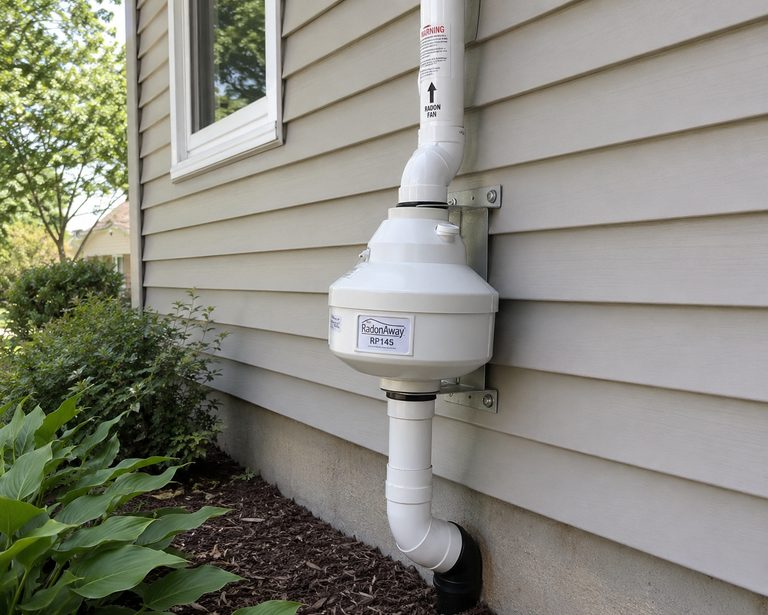
The EPA-recognized fix for crawl space homes is sub-membrane depressurization. We install a heavy-duty sealed vapor barrier over the entire crawl space floor, run it up the foundation walls, and seal every seam and penetration. A suction point goes beneath the membrane, connected by PVC to a quiet inline radon fan that runs continuously — maintaining negative pressure under the barrier so soil gas is drawn out and vented above the roofline instead of into the house.
Every system includes a sealed 20-mil reinforced vapor barrier serving as the radon membrane, fully sealed seams and penetrations, a properly placed suction pit, a low-watt inline fan rated for continuous duty, discreet exterior PVC routing — chosen with your home's curb appeal in mind — terminated above the roofline per EPA guidance, a system monitor, and post-install radon testing to confirm levels have fallen below 4 pCi/L.
If you're already planning crawl space work on a Green Hills renovation, this is the moment to handle radon: the sealed membrane used in full encapsulation is the same membrane the radon system depends on, so one liner controls ground moisture and soil gas together. Homes with an existing encapsulation can have a suction point and fan retrofitted to the current barrier.
Costs vary with the footprint of the crawl space — Green Hills ranches with additions often have larger, irregular layouts — the number of suction points needed to hold negative pressure, whether encapsulation is already done, and the exterior vent route. We give a free written estimate after walking your crawl space in person.
We walk your Green Hills crawl space, review any prior radon tests, and plan the suction layout — including any addition footprints.
Itemized scope and price, including any encapsulation work needed for the system to perform.
Membrane, suction pit, PVC routing, fan, and exterior termination — installed cleanly and code-aware.
We retest to confirm radon levels have dropped below the EPA action level and leave you with a working system monitor.
Yes. Green Hills is part of Davidson County, which the EPA designates Radon Zone 1 — its highest-risk category. The limestone under the neighborhood's wooded hills produces radon the same way it does everywhere else in Middle Tennessee, and homes off Hillsboro Pike test above the 4 pCi/L action level regularly.
Usually not. Most Green Hills renovations focus on everything above the subfloor while the original 1950s-60s crawl space stays untouched — bare dirt, open vents, no sealed barrier. A tighter renovated envelope can actually hold radon indoors longer once it gets in.
Sub-membrane depressurization: a sealed vapor barrier installed across the crawl space floor and up the walls, a suction point beneath the membrane, and a quiet inline fan that continuously pulls soil gas out from under the barrier and vents it above the roofline.
We route the vent stack along the most discreet elevation available — usually a rear or side wall screened by landscaping — and review the routing with you before installation begins.
Inline radon fans run quietly and continuously. Installed on the exterior stack with proper couplings, the fan is typically inaudible from inside a Green Hills home.
A pre-install test establishes your baseline, and a follow-up test after at least 24 hours of continuous fan operation confirms the system is holding levels below the EPA's 4 pCi/L action level.
Schedule a free crawl space evaluation. We'll walk the space, review any test results you have, and give you a clear plan.
Get My Free InspectionTell us a little about your home and we'll be in touch soon to schedule a no-pressure visit.
