We seal the crawl space floor with a heavy membrane, pull radon out from beneath it, and vent the soil gas above your roofline.
All of Sumner County carries the EPA's Radon Zone 1 designation — the highest of three risk levels. The fractured limestone bedrock beneath Hendersonville contains trace uranium that decays into radon gas, which works its way up through soil and rock seams toward the surface. Proximity to Old Hickory Lake makes no difference: lakefront streets, the Indian Lake area, and neighborhoods along Drakes Creek all sit over the same gas-producing geology, and elevated indoor readings show up across every part of town.
Most of Hendersonville was built out between the 1970s and the 2000s, and the typical home from that era sits on a vented crawl space with a thin sheet of 6-mil plastic — if anything at all — laid loosely on the dirt. Radon drifts straight through that loose plastic, up through open foundation vents, and into the living space via subfloor gaps, plumbing chases, and ductwork penetrations. Homes near the lake often have the added pressure of damp soil, which can drive even more soil gas movement under the house.
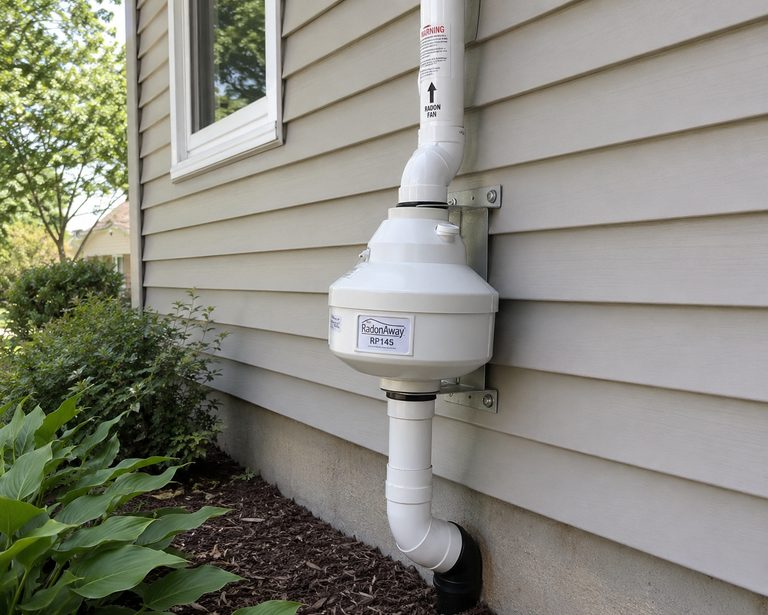
For crawl space homes, the EPA-recognized approach is sub-membrane depressurization. We cover the entire crawl space floor with a heavy-duty sealed vapor barrier, run it up the foundation walls, and lock down every seam and penetration. Beneath that membrane we install a suction point connected to PVC piping and a quiet inline radon fan. The fan runs continuously, holding the space under the barrier at negative pressure so soil gas is captured and exhausted above the roofline instead of rising into your home.
Your system includes a sealed 20-mil reinforced vapor barrier serving as the radon membrane, fully taped seams and sealed penetrations, a properly excavated suction pit, a low-watt inline radon fan rated for continuous duty, exterior PVC routed and terminated above the roofline per EPA guidance, a manometer-style system monitor so you can confirm the fan is pulling, and post-install radon testing to verify levels have come down below 4 pCi/L.
If your Hendersonville crawl space hasn't been encapsulated yet, this is the natural time to do both — the sealed membrane that blocks ground moisture is the same membrane the radon system depressurizes beneath. And if you already have an encapsulated crawl space, we can retrofit an active suction point and fan to the existing barrier without starting over.
Price depends on the square footage under the house, how many suction points it takes to achieve negative pressure beneath the membrane, whether an encapsulation is already in place, and where the vent stack can be routed on the exterior. We provide a free written estimate after walking your Hendersonville crawl space in person.
We walk your Hendersonville crawl space, review any prior radon tests, and map the suction layout your home needs.
An itemized scope and price, including any encapsulation work required for the system to perform properly.
Membrane, suction pit, PVC routing, fan, and exterior termination — installed cleanly and code-aware.
We retest to confirm radon has dropped below the EPA action level and leave you with a working system monitor.
Yes. Sumner County is classified EPA Radon Zone 1, the highest-risk designation, and homes from the Old Hickory Lake shoreline to the Indian Lake area regularly test above the 4 pCi/L action level. A lake view doesn't change what's in the bedrock below.
Building age doesn't determine radon levels — the limestone geology under the home does. Hendersonville subdivisions built from the 1970s through the 2000s typically have vented crawl spaces with thin, unsealed plastic on the floor, which offers no meaningful resistance to soil gas.
We use sub-membrane depressurization: a heavy sealed vapor barrier covers the crawl space floor and walls, a suction pit sits beneath it, and a continuously running inline fan draws soil gas out from under the membrane and vents it above the roofline.
Rarely. Inline radon fans are built for quiet continuous duty, and when mounted properly on an exterior wall they're typically barely audible from inside the home.
The lake itself doesn't produce radon, but damp lakeside soil can increase soil gas movement under a home. Either way, the limestone bedrock — not the water — is the radon source, and it underlies all of Hendersonville.
Yes. We recommend a pre-install test to establish a baseline and a post-install test after at least 24 hours of continuous fan operation to confirm levels have dropped below 4 pCi/L.
Schedule a free crawl space evaluation. We'll walk the space, review any test results you have, and give you a clear plan.
Get My Free InspectionTell us a little about your home and we'll be in touch soon to schedule a no-pressure visit.
