We seal your crawl space with a heavy membrane, create suction beneath it, and vent radon above the roofline.
Davidson County sits in EPA Radon Zone 1, the agency's highest-risk classification, and Madison's stretch of north Nashville is built on the same uranium-bearing limestone as the rest of the county. The Cumberland River looping around Neely's Bend shaped the land, but it's the rock below that produces radon — continuously, in every season, under every street from Gallatin Pike to the riverbank. Whether a particular house accumulates that gas depends on the pathways its foundation offers.
Madison boomed in the postwar decades, and its signature housing — single-story brick and frame ranches around Amqui and the neighborhoods off Gallatin Pike — was built over vented crawl spaces with bare dirt floors. Vapor barriers simply weren't part of construction practice then. Soil gas rises straight off the exposed dirt and finds its way up through subfloor gaps, hatch openings, and sixty-plus years of accumulated plumbing, electrical, and HVAC penetrations through the floor system.
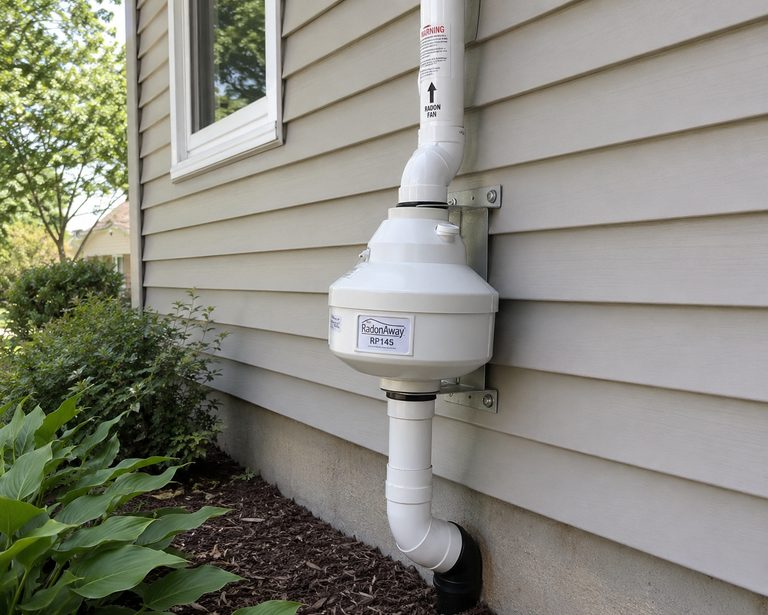
The EPA-recognized approach for crawl space homes is sub-membrane depressurization. We lay a heavy-duty sealed vapor barrier over the entire dirt floor, run it up the block foundation walls, and seal every seam, pier, and penetration. Beneath the membrane, a suction pit connects through PVC piping to a quiet inline radon fan that runs around the clock — keeping the soil side of the barrier at negative pressure and pushing captured gas out above the roofline.
Each system includes a sealed 20-mil reinforced vapor barrier acting as the radon membrane, all seams and penetrations sealed, a correctly placed suction pit, a low-wattage inline radon fan rated for continuous use, exterior PVC routed and terminated above the roofline per EPA guidance, a monitor so you can see the system is holding suction, and post-install radon testing to verify levels have fallen below 4 pCi/L.
Most Madison ranches with dirt crawl spaces also deal with ground moisture — damp air, musty smells, and humid summers under the house. Because the radon membrane and an encapsulation moisture barrier are the same sealed layer, combining the two projects addresses both problems in a single visit. Homes that are already encapsulated can have the suction pit and fan retrofitted to the existing barrier.
Cost varies with the footprint of the crawl space, the number of suction points required to depressurize beneath the membrane, the amount of sealing work needed in an older foundation, and the exterior vent route — usually a short run on Madison's single-story ranches. We walk your home in person and provide a free written estimate.
We inspect your Madison crawl space, look over any existing radon tests, and plan the membrane and suction layout.
A clear, itemized scope and price, including any sealing or barrier work your older foundation needs.
Membrane, suction pit, PVC routing, fan, and exterior termination — installed cleanly and code-aware.
We retest to confirm radon has fallen below the EPA action level and leave you with a working system monitor.
Yes. Madison is part of Davidson County, which the EPA designates Radon Zone 1 — its highest-risk category. From Amqui to Neely's Bend, homes sit over the same uranium-bearing limestone as the rest of Middle Tennessee, and indoor readings above the 4 pCi/L action level are common.
They tend to have more entry points. Madison's midcentury ranches were built over vented crawl spaces with bare dirt floors — vapor barriers weren't standard practice yet — so soil gas rises straight off the dirt and into the house through subfloor gaps and decades of plumbing and duct penetrations.
We install sub-membrane depressurization: a heavy sealed vapor barrier across the dirt floor and up the block walls, a suction pit beneath it, and a quiet inline fan that runs continuously, pulling soil gas from under the membrane and venting it above the roofline.
The river isn't a radon source — the limestone bedrock is, and it underlies all of Madison including Neely's Bend. Riverside soil moisture can influence how soil gas moves, but the only way to know your home's level is to test it.
No — closing vents doesn't stop radon and can make crawl space moisture worse. Effective mitigation requires a sealed membrane with active suction beneath it, so the gas is captured and exhausted rather than trapped under the house.
Test before installation for a baseline, then retest after the fan has run continuously for at least 24 hours. The follow-up reading should come in below the EPA's 4 pCi/L action level, and the included monitor lets you confirm suction anytime.
Schedule a free crawl space evaluation. We'll walk the space, review any test results you have, and give you a clear plan.
Get My Free InspectionTell us a little about your home and we'll be in touch soon to schedule a no-pressure visit.
