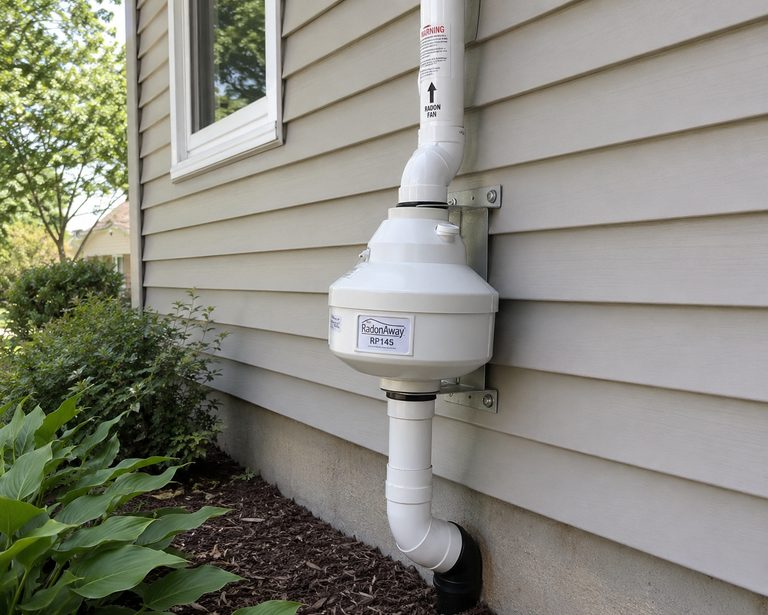
We install sub-membrane depressurization systems — a sealed vapor barrier over the crawl space soil, a suction pit beneath it, and a quiet inline fan exhausting radon above the roofline.
All of Rutherford County, Smyrna included, carries the EPA's Radon Zone 1 designation — the top of its three-tier risk scale. The reason is the rock: the Central Basin limestone under the Stones River corridor holds trace uranium that decays into radon gas, which works upward through fractures and karst features in the bedrock. A home near the river, by the Nissan plant, or out by Lee Victory Park all sit over the same gas-producing geology.
Smyrna's housing stock is dominated by subdivisions built from the 1980s through the 2010s, and the typical crawl space from that era got minimal treatment: open foundation vents and a thin layer of unsealed plastic on the dirt, if anything. Radon rises off that exposed soil, pools beneath the subfloor, and is drawn into the house through plumbing and wiring penetrations, duct chases, and gaps at the band joist. Slab-built homes in town aren't exempt either — gas enters through cracks and utility openings in the concrete.
For crawl space homes, the EPA-recognized remedy is sub-membrane depressurization. We seal a heavy-duty vapor barrier over the full crawl space floor and up the foundation walls, locking down every seam and penetration. A suction point beneath the membrane connects through PVC piping to a quiet inline radon fan that runs continuously, keeping the soil under the barrier at negative pressure. Soil gas gets pulled out and exhausted above the roofline rather than rising into your home.
Each system includes a sealed 20-mil reinforced vapor barrier acting as the radon membrane, all seams and penetrations sealed, a correctly sized suction pit, a continuous-duty low-watt inline fan, exterior PVC routed and terminated above the roofline per EPA guidance, a system monitor that confirms the fan is maintaining vacuum, and post-install radon testing to verify levels have dropped below 4 pCi/L.
Smyrna's humid summers make crawl space moisture a constant battle, and the sealed membrane at the heart of a radon system is the same one used in a full encapsulation. Doing both at once gets you radon control and moisture control from a single install. Already encapsulated? We can usually add a suction pit and fan to your existing barrier.
Cost depends on crawl space square footage, the suction layout required to keep negative pressure under the membrane, the condition of any existing plastic or encapsulation, and where the vent stack can run on the home's exterior. We provide a free written estimate after evaluating your Smyrna crawl space in person.
We walk your Smyrna crawl space, review any prior radon tests, and work out the suction layout your foundation needs.
Itemized scope and price, including any barrier or encapsulation work required for the system to perform.
Membrane, suction pit, PVC routing, fan, and exterior termination — installed cleanly and code-aware.
We retest to confirm radon levels have dropped below the EPA action level and leave you with a working system monitor.
Many homes do. Rutherford County is designated EPA Radon Zone 1 — the highest-risk category — because the limestone bedrock beneath Smyrna contains trace uranium that decays into radon gas. Homes test above the 4 pCi/L action level in subdivisions across town, from established 1980s neighborhoods to newer streets near Lee Victory Park.
Any home can, because radon is driven by the rock below, not the builder or the decade. That said, Smyrna's many 1980s–2010s crawl space homes are frequent offenders: most have vented crawl spaces with thin, unsealed plastic on the dirt, which gives soil gas an easy route up through the subfloor and ductwork.
Through sub-membrane depressurization. A heavy-duty vapor barrier is sealed over the crawl space floor and up the walls, a suction point goes beneath the membrane, and a quiet inline fan runs continuously — pulling soil gas out from under the barrier and exhausting it above the roofline before it can enter the house.
No. Inline radon fans run quietly and continuously by design. Installed on an exterior wall, the sound is typically barely noticeable from inside the home or from the property line.
The inline fan is low-wattage, so the electricity cost is modest. The sealed membrane also cuts crawl space humidity, which lightens your HVAC load and often helps offset the fan's draw.
After the fan has run continuously for at least 24 hours. A pre-install test gives you a baseline, and the post-install test verifies the system is holding levels below the EPA's 4 pCi/L action level.
Schedule a free crawl space evaluation. We'll walk the space, review any test results you have, and give you a clear plan.
Get My Free InspectionTell us a little about your home and we'll be in touch soon to schedule a no-pressure visit.
