We install sub-membrane depressurization systems built into a sealed crawl space — pulling soil gas out from under the barrier and venting it safely above the roofline.
Spring Hill straddles the Williamson/Maury County line, and both counties are designated EPA Radon Zone 1 — the highest of three risk categories. The limestone and dolomite bedrock that runs under most of Middle Tennessee contains trace uranium, which decays into radon and seeps upward through soil and fractured rock. Newer construction is not exempt: radon levels are determined by geology under the home, not the age of the build.
In Spring Hill's mix of crawl-space-on-grade builds and partial basements, radon most commonly enters through unsealed crawl space floors, gaps around foundation walls, plumbing penetrations, and open foundation vents. Many of the homes built during Spring Hill's 2005–2020 growth boom were finished with cheap 6-mil builder-grade plastic that was never sealed at the walls — effectively no radon barrier at all.
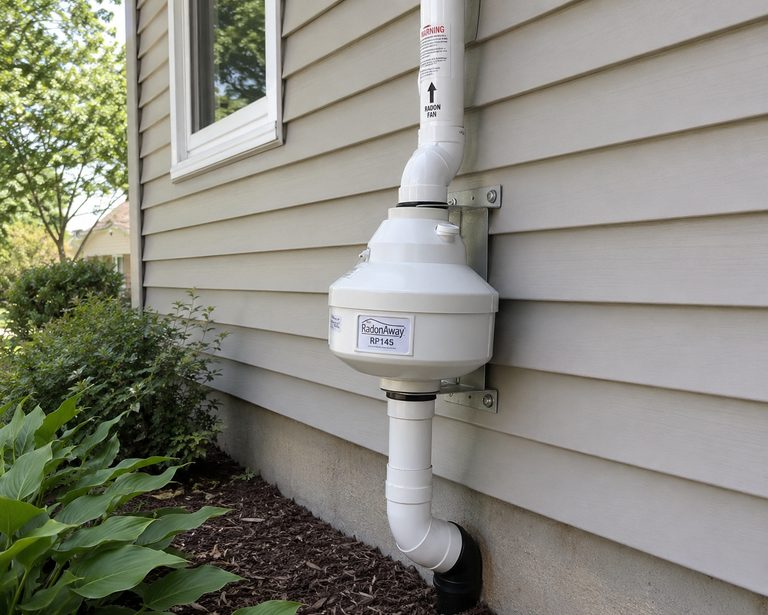
For homes with a crawl space, the standard EPA-recognized fix is sub-membrane depressurization. We install a heavy-duty sealed vapor barrier over the entire crawl space floor and run it up the foundation walls. A suction point is placed beneath the membrane, connected to PVC piping and a quiet inline radon fan that runs continuously. The fan pulls soil gas out from under the barrier and vents it above the roofline before it can enter your home.
Every installation includes a sealed 20-mil reinforced vapor barrier acting as the radon membrane, all seams and penetrations sealed, a properly placed suction pit, a low-watt inline radon fan rated for continuous use, exterior PVC routed and vented above the roofline per EPA guidance, a system monitor so you can verify the fan is operating, and post-install radon testing to confirm levels have dropped below 4 pCi/L.
If your Spring Hill home doesn't have a sealed crawl space yet, radon mitigation pairs naturally with a full encapsulation — the same membrane that controls moisture also serves as the radon barrier. Homes that already have an encapsulation can have an active depressurization system retrofitted to the existing barrier.
Pricing depends on the crawl space size, suction layout required to achieve negative pressure under the membrane, whether encapsulation is already in place, and the exterior route for the vent stack. We give a free written estimate after walking your Spring Hill home in person.
We walk your Spring Hill crawl space, review any prior radon tests, and identify the right suction layout for your home.
Itemized scope and price, including any encapsulation work needed for the system to perform.
Membrane, suction pit, PVC routing, fan, and exterior termination — installed cleanly and code-aware.
We retest to confirm radon levels have dropped below the EPA action level and leave you with a working system monitor.
Yes. Williamson and Maury counties — the two counties Spring Hill straddles — both sit in EPA Radon Zone 1, the highest-risk zone. Many Spring Hill homes test above the 4 pCi/L action level, especially homes over fractured limestone bedrock.
Spring Hill's rapid growth has produced thousands of homes built quickly on limestone-rich soil. Radon enters through crawl space vents, foundation cracks, and unsealed builder-grade vapor barriers. Newer subdivisions are not exempt — radon levels are driven by geology, not building age.
Sub-membrane depressurization. A sealed vapor barrier covers the floor and walls, a suction point is installed beneath the membrane, and an inline radon fan continuously pulls soil gas out and vents it above the roofline before it can enter your living space.
Modern inline radon fans are designed for continuous operation and are quiet — typically barely audible from inside the home when properly installed on an exterior wall.
The fan itself is low-wattage and runs continuously, but the impact on a typical Spring Hill energy bill is modest. The sealed membrane also reduces moisture load on your HVAC, which often offsets the difference.
Yes. We recommend a pre-install test to confirm elevated radon and establish a baseline, and a post-install test after 24 hours of continuous fan operation to verify the system is reducing levels below 4 pCi/L.
Schedule a free crawl space evaluation. We'll walk the space, review any test results you have, and give you a clear plan.
Get My Free InspectionTell us a little about your home and we'll be in touch soon to schedule a no-pressure visit.
